Knowledge is Power in Crypto
Practical resources on scam reporting, stolen-fund tracing, and fraud recovery decisions.
Latest Insights and Articles
Top 5 Crypto Scams and How to Avoid Them
Learn to identify common cryptocurrency scams like phishing, rug pulls, and fake ICOs.
Understanding Blockchain Security
Explore the security measures that keep digital transactions safer.
The Importance of AML Compliance in Crypto
Why anti-money laundering controls matter for legitimacy and safety.
Downloadable Guides
How to Spot Crypto Scams
A practical checklist with red flags to help identify and avoid cryptocurrency scams.
Securing Your Digital Wallet
Essential steps to protect crypto wallets from compromise and theft.
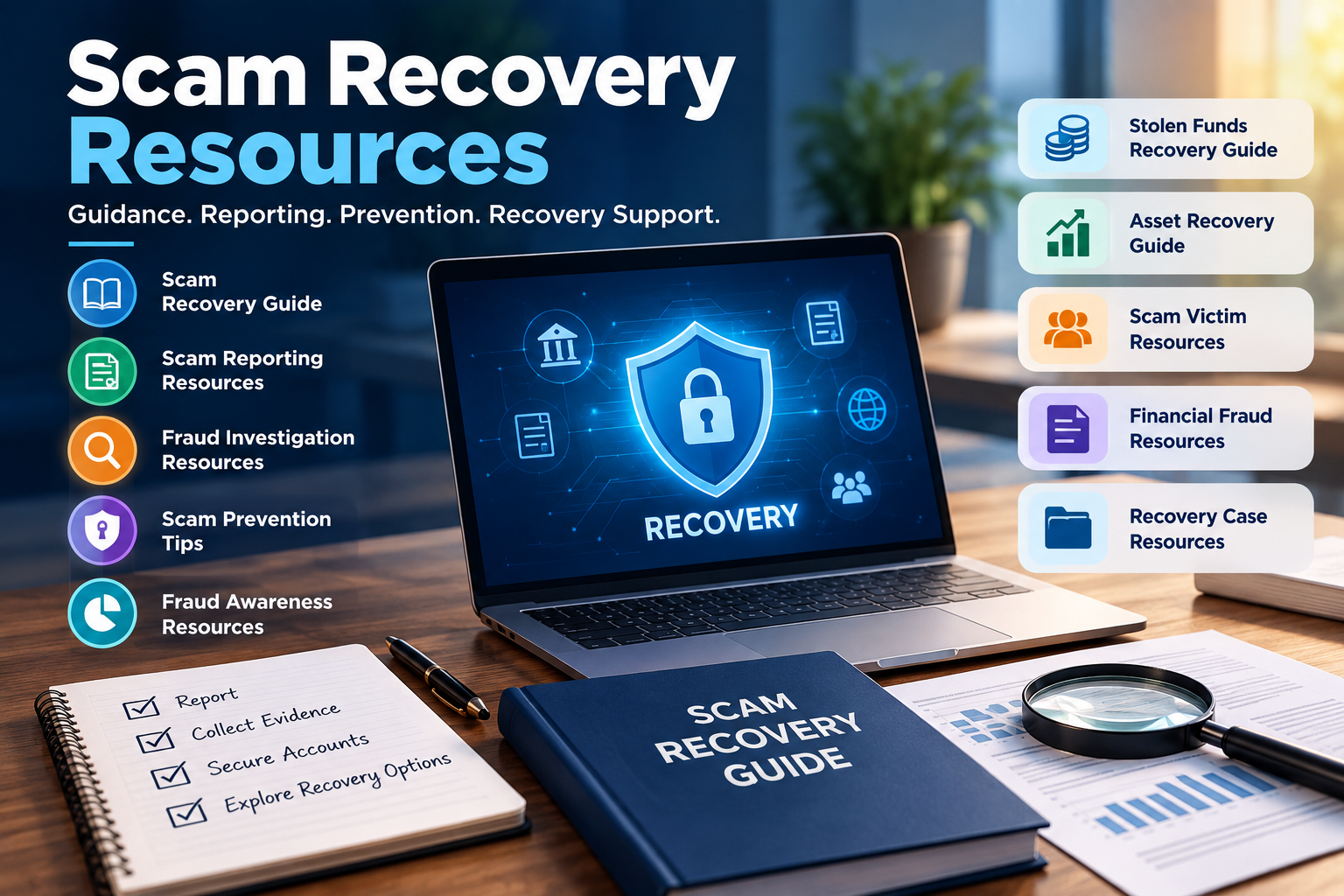
Scam Recovery Resources: A Practical Guide to Reporting, Prevention, and Case Support
Scam Recovery Resources can help individuals understand what to do after suspected fraud, organize evidence, report incidents, protect remaining accounts or funds, and evaluate appropriate recovery options. A well-organized response is especially important when a scam involves financial transfers, cryptocurrency, online investments, marketplaces, social media, or identity-related information.
Recovery should begin with facts and documentation rather than promises of guaranteed results. The available options depend on the type of scam, payment method, timing, evidence, and organizations involved.
Scam Recovery Guide
A Scam Recovery Guide should begin with immediate protection. If you believe you have been scammed, avoid sending additional money until the situation has been independently evaluated.
Start by:
-
Preserving relevant evidence.
-
Recording the timeline of events.
-
Contacting the financial institution or payment provider when applicable.
-
Securing affected online accounts.
-
Reporting the suspected scam through appropriate channels.
-
Organizing transaction and communication records.
-
Being cautious about people offering recovery services.
Useful evidence may include emails, messages, receipts, invoices, transaction confirmations, website addresses, usernames, wallet addresses, transaction hashes, and screenshots.
Scam Reporting Resources
Scam Reporting Resources vary depending on the country, type of scam, and platform involved.
Potential reporting channels can include:
-
Local law enforcement
-
Consumer-protection authorities
-
Financial institutions
-
Payment providers
-
Cryptocurrency exchanges
-
Online marketplaces
-
Social-media platforms
-
Relevant regulatory agencies
When submitting a report, provide factual information in chronological order. Include supporting evidence and avoid making claims that cannot be substantiated.
Keep copies of submitted reports and any reference numbers you receive.
Fraud Recovery Resources
Fraud Recovery Resources can help victims understand the practical steps available after suspected financial fraud.
Useful resources may include:
-
Bank fraud departments
-
Payment-provider dispute procedures
-
Consumer-protection organizations
-
Law-enforcement reporting systems
-
Cryptocurrency exchange support
-
Legal professionals
-
Qualified cybersecurity or digital-forensics professionals
The appropriate resource depends on how the transaction occurred.
A credit-card transaction, bank transfer, cryptocurrency transaction, and marketplace payment may each have different procedures and limitations.
Scam Prevention Tips
Scam Prevention Tips can reduce the risk of becoming a victim in the future.
Be cautious when someone:
-
Creates urgency around a financial decision
-
Requests cryptocurrency payments without adequate verification
-
Promises unusually high or guaranteed returns
-
Requests passwords or authentication codes
-
Asks for a seed phrase or private key
-
Demands additional payments to release supposed funds
-
Uses unfamiliar payment methods
-
Refuses independent verification
-
Contacts you unexpectedly with an investment or recovery opportunity
Before sending money, verify the identity of the recipient and independently confirm the organization or service involved.
Fraud Prevention Guide
A Fraud Prevention Guide should focus on account security, financial awareness, and careful verification.
Important practices include:
-
Use strong, unique passwords.
-
Enable multi-factor authentication.
-
Keep devices and software updated.
-
Review financial transactions regularly.
-
Verify payment instructions independently.
-
Avoid suspicious links and attachments.
-
Protect sensitive identity information.
-
Keep cryptocurrency recovery phrases private.
-
Maintain secure backups.
-
Be cautious about unsolicited investment opportunities.
Fraud prevention is most effective when several security measures are used together.
Online Scam Reporting
Online Scam Reporting involves submitting information about suspected fraudulent activity through the appropriate platform or authority.
Before reporting, prepare a concise summary that explains:
What happened → When it happened → Who or what was involved → How money or information moved → What evidence is available → What actions have already been taken
For cryptocurrency cases, include relevant transaction hashes and public wallet addresses when appropriate, but never include private keys or recovery phrases.
Fraud Investigation Resources
Fraud Investigation Resources can help organize and analyze information associated with suspected fraudulent activity.
These resources may include:
-
Transaction records
-
Bank statements
-
Payment confirmations
-
Communication histories
-
Website records
-
Public business information
-
Account information
-
Digital evidence
-
Blockchain transaction records
Evidence should be compared rather than reviewed in isolation. For example, a payment record can be compared with the communication that preceded the payment.
Stolen Funds Recovery Guide
A Stolen Funds Recovery Guide should begin by documenting the transaction and contacting the relevant financial institution or service as soon as possible.
For financial transfers, provide:
-
Transaction date
-
Amount
-
Recipient
-
Transaction reference
-
Payment method
-
Supporting communications
For cryptocurrency, preserve the transaction hash, wallet addresses, blockchain network, and related communications.
Blockchain transactions generally cannot simply be reversed by requesting a reversal from the blockchain itself. However, documenting the transaction can support reporting and further investigation.
Asset Recovery Guide
An Asset Recovery Guide should distinguish between recovering access to an asset and recovering an asset that has already been transferred.
For example, an inaccessible cryptocurrency wallet may involve a technical access problem. Cryptocurrency sent to another wallet address involves a transaction issue.
These situations require different approaches.
Before engaging a recovery provider, understand exactly what service is being offered and what evidence supports the proposed approach.
Scam Victim Resources
Scam Victim Resources can provide practical support after an incident.
Depending on the circumstances, victims may benefit from:
-
Financial institution support
-
Consumer-protection resources
-
Law-enforcement reporting
-
Platform reporting systems
-
Legal advice
-
Cybersecurity assistance
-
Digital-forensics support
-
Trusted personal support networks
Victims should not feel pressured to make additional payments simply because someone claims to have special access to recovery systems.
Financial Fraud Resources
include organizations and services that help people respond to suspected financial misconduct.
Depending on location and circumstances, these may include:
-
Banks
-
Card providers
-
Payment processors
-
Consumer-protection authorities
-
Financial regulators
-
Law-enforcement agencies
-
Legal professionals
When contacting a financial institution, provide the transaction details and explain clearly why the transaction is believed to be fraudulent or unauthorized.
Recovery Information
Recovery Information should focus on realistic and verifiable options.
A recovery assessment may consider:
-
Type of loss
-
Date of incident
-
Payment method
-
Recipient information
-
Evidence available
-
Whether cryptocurrency was involved
-
Whether an account remains accessible
-
Whether the transaction can potentially be disputed
-
Whether the relevant platform has reporting procedures
No recovery resource can guarantee that every lost asset will be returned.
Scam Investigation Guide
A Scam Investigation Guide can help organize a suspected scam into a chronological case.
Create a timeline showing:
-
Initial contact
-
Claims or promises made
-
Requests for money or information
-
Payments or transfers
-
Follow-up communications
-
Discovery of suspicious activity
-
Reporting actions
Then organize supporting evidence under each event.
This approach makes the case easier to understand and can help identify missing information.
Fraud Awareness Resources
Fraud Awareness Resources can help people recognize common warning signs before financial losses occur.
Important warning signs include unexpected requests for money, pressure to act immediately, unusually attractive investment claims, requests for confidential credentials, fake support representatives, and individuals claiming they can recover previously lost funds for an upfront payment.
Awareness is particularly important after a scam because victims may be targeted again.
Recovery Case Resources
Recovery Case Resources can help create a complete case file.
A useful case file can contain:
-
Case summary
-
Timeline
-
Financial records
-
Communication records
-
Website information
-
Account information
-
Cryptocurrency transaction details
-
Screenshots
-
Contracts and invoices
-
Reporting records
-
Reference numbers
-
Investigation notes
Keep original evidence whenever possible and create separate copies when documents need to be annotated.
Organizing a Complete Scam Recovery Resource Plan
A strong Scam Recovery Resources strategy combines immediate protection, evidence preservation, reporting, investigation, and prevention.
A practical sequence is:
Protect → Document → Report → Investigate → Follow legitimate recovery channels → Strengthen security
First, protect remaining accounts and assets. Next, document the incident carefully. Report it to the relevant financial institution, platform, or authority. Then organize the evidence for further investigation or professional assistance where appropriate.
People seeking recovery assistance should be especially careful with secondary recovery scams. Be skeptical of unsolicited individuals who promise guaranteed results, claim they can instantly reverse blockchain transactions, or demand repeated payments before supposedly releasing recovered funds.
Never provide a seed phrase, private key, password, PIN, or authentication code to an unsolicited recovery provider.
The most valuable Scam Recovery Resources are those that provide clear information, encourage proper evidence preservation, direct victims toward appropriate reporting channels, and set realistic expectations. A structured response can help protect remaining assets, improve documentation, and provide a stronger foundation for legitimate investigation and recovery efforts.